
On the day of Shavuot, a day to commemorate the delivery by Moses of a book that is foundational to western civilization, a supporter of Hamas used a flame thrower and molotov cocktails to burn Jews, “simply because they were Jews”. The victims had gathered at a Jewish community event in Boulder, Colorado, held in support of hostages in Gaza. The terrorist injured at least eight people ranging in age from 52 to 88 before being detained. One of the injured was a holocaust survivor. The attacker yelled “free Palestine” as he torched and maimed human flesh.
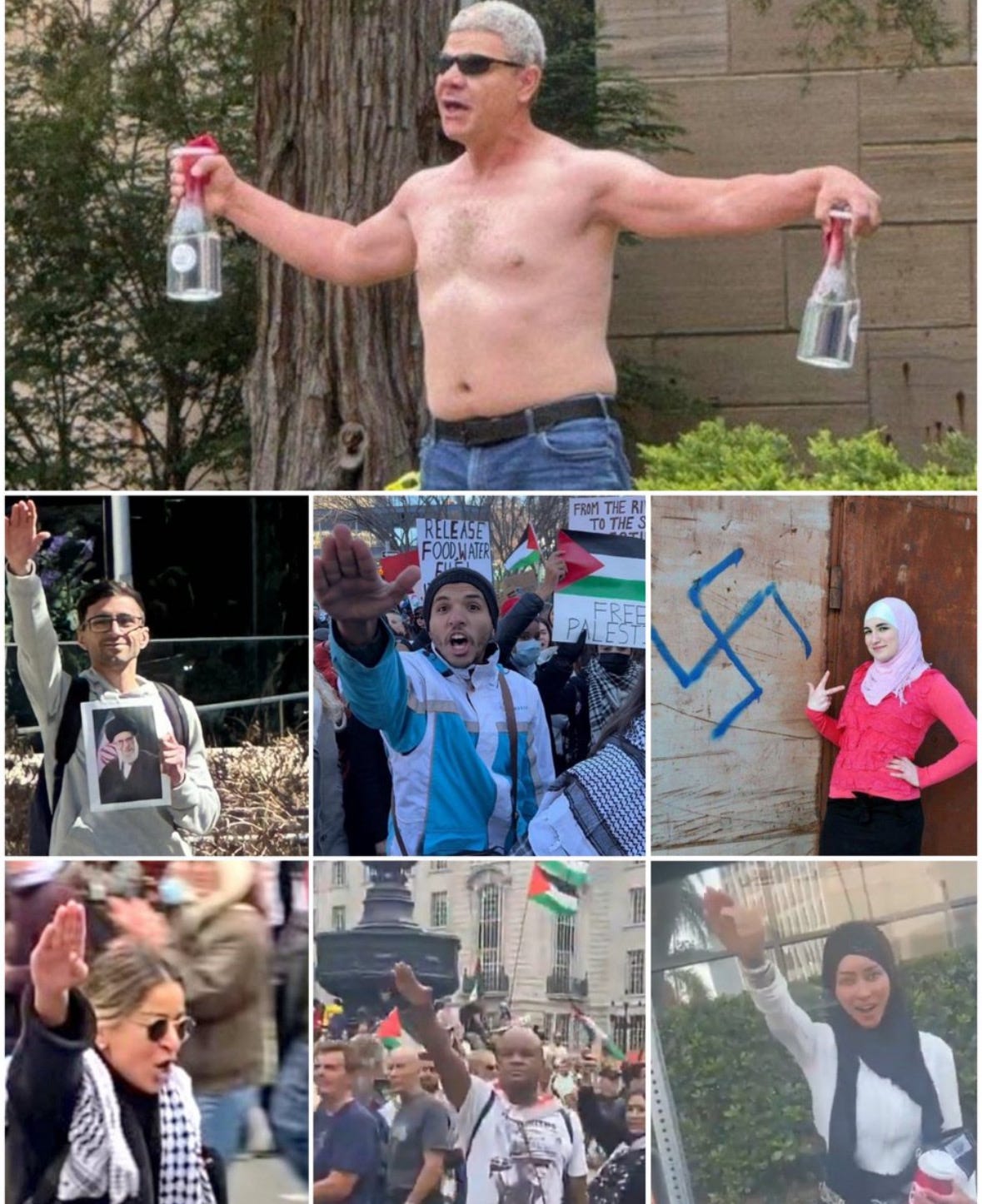
This horrific act comes on the heels of the killing in DC last week and the calls by many on the fringe left to “globalize the intifada”. For those “progressives” calling for a “free Palestine”, this is what free Palestine looks like:
I am reprinting (without permission, but I am sure he would approve) a letter from Israeli journalist Nadav Eyal. Nadav is a frequent guest on Dan Senor’s Call Me Back podcast who has been teaching at an American college campus and has spoken extensively with Jewish students on a number of campuses since 2023.
Israel Is at War; the Diaspora Is Under Attack
Nadav Eyal
I’ve been covering terror attacks for over twenty years. I began my career as a journalist reporting from the West Bank for Israel’s Army Radio. I’ve seen Molotov cocktails thrown with my own eyes, and I’ve seen the aftermath of such attacks. But seeing those scenes from Boulder were deeply shocking—and even more so, the realization that this was a replication, an imitation, of terrorist attacks in Israel.
An intifada is, by definition, a violent uprising. The Second Intifada (2000-2005) is more widely remembered—the one of suicide bombings. But the First Intifada — which began in 1987 — was a popular grassroots movement of violent protests, stone throwing, and Molotov cocktails.
One of the most infamous attacks during that time was the firebombing of the Moses family’s car as they drove from Alfei Menashe to Tel Aviv during Passover 1987. As they passed near the Palestinian village of Hableh, a Molotov cocktail was thrown, hitting their car and igniting it. Ofra Moses, the mother, was six months pregnant. Despite her husband’s efforts to save her, she was burned alive. Their 5-year-old son, Tal, was critically injured and later died. The father and two other children were seriously wounded but survived.
Over the past year and a half, we’ve heard increasingly loud calls to “globalize the intifada”—a slogan now commonly used by those who support Hamas in its war. They said they would do it—and they are. The attack in Washington, and now the one in Boulder, reveal just how easily the war in Gaza can shift into global violence against Jews.
Young students at Ivy League universities chose to end their graduation this year with symbols and slogans expressing radical support for the values of the intifada. I haven’t heard a single voice in these ceremonies speak about peace, coexistence, rebuilding Gaza, victory for moderates, or even the establishment of an independent Palestinian state alongside a secure Israel. The tone and rhetoric are exclusively of binary struggle against Israel and anyone who supports it, the delegitimization of its very existence, and the demonization of the idea that Jews deserve a state—like every other people.
Needless to say, even the fiercest opponents of Russia in its war aren’t calling for the dismantling of the Russian state, the erasure of Russian self-determination, or promoting military uprisings worldwide against Russia’s allies. That kind of treatment is reserved only for Israel—for reasons that are well-known and, yes, antisemitic.
Those who spent years spreading hatred toward “Zionists” — meaning Jews — and toward Israel are now reaping the rewards: violence. A walk and run for the hostages in Boulder turned into a terror attack site, with people scrambling to pour water on victims set aflame. If you reduce everything to comparison to Nazi Germany and the Holocaust, then attacking the “Nazi sympathizers” is legitimate and brave.
As an Israeli, I think now of the American communities I visited over the past two years—of the time, attention, emotion, and resources that American Jews have invested in Israel since the beginning of the war. These are the people who came every Sunday since October 7th in Boulder, Colorado, because they wanted to demand the hostages’ return. And now, they’ve been attacked—the attacker stood just a few feet from a woman on fire and kept cursing “the Zionists.”
Israel is at war, but Jews are the majority there. I do not presume to give advice to the minority—the Jewish community in America—on how to respond to what may be the signs of a local intifada. All I can offer is this: remember Jewish history. When Jews were attacked, they survived by organizing, protecting themselves, and being prepared for what may come.
Beyond all that, as an Israeli who sees patriotic Americans and Jews injured in a terror attack because they marched for the hostages thousands of miles from Jerusalem, I feel the need to say something Israelis should practice more often toward the Jewish community here—and that word is TODA.
“Thank you” cannot begin to express the depth of Israel’s debt to the most successful Diaspora in Jewish history—living in a country that remains humanity’s best hope. After October 7, Israelis learned a hard truth: they are mostly alone. Those standing with them—above all—are Americans. And among Americans, it is the Jewish community that stands with them most deeply. What we’ve all learned over the past 20 months is that, in the end, what we have is mostly each other. Israel’s leaders must never forget that lesson.
I thank you — as a person and as an Israeli — each and every American who works to release our hostages, the paramount aim of this war according to the Israeli public, in every poll. And I salute those who marched in Boulder, Colorado, and were attacked because they are human beings, Jews, and American patriots.
Brad out.
 Jew News Review