The Jew News Review – October 4, 2025 – “From Fenway to Fat Bears to the Sounds of Hollywood Silence”

Shabbat shalom!

First, a belated g’mar tov and a heartfelt hope that everyone enjoyed a good breaking of the fast after a steady diet of atonement. If ever there were a year that demanded repentance, reflection, and maybe an extra bagel with cream cheese schmear afterward, this was it.

And since this is the season of honest reckoning, let’s begin with a little gratitude, a “tip of the kippah” to the Boston Red Sox. They may not have been quite “Built for Fall”, as MLB’s marketing slogan insists, but they still gave us a season worth watching. Scrappy, imperfect, full of effort and flashes of youthful brilliance. They didn’t deliver another ring, but they delivered something else: joy, grit, and the sweet reminder that even when you fall short, playing with heart still matters.

If only the same could be said for Hollywood.

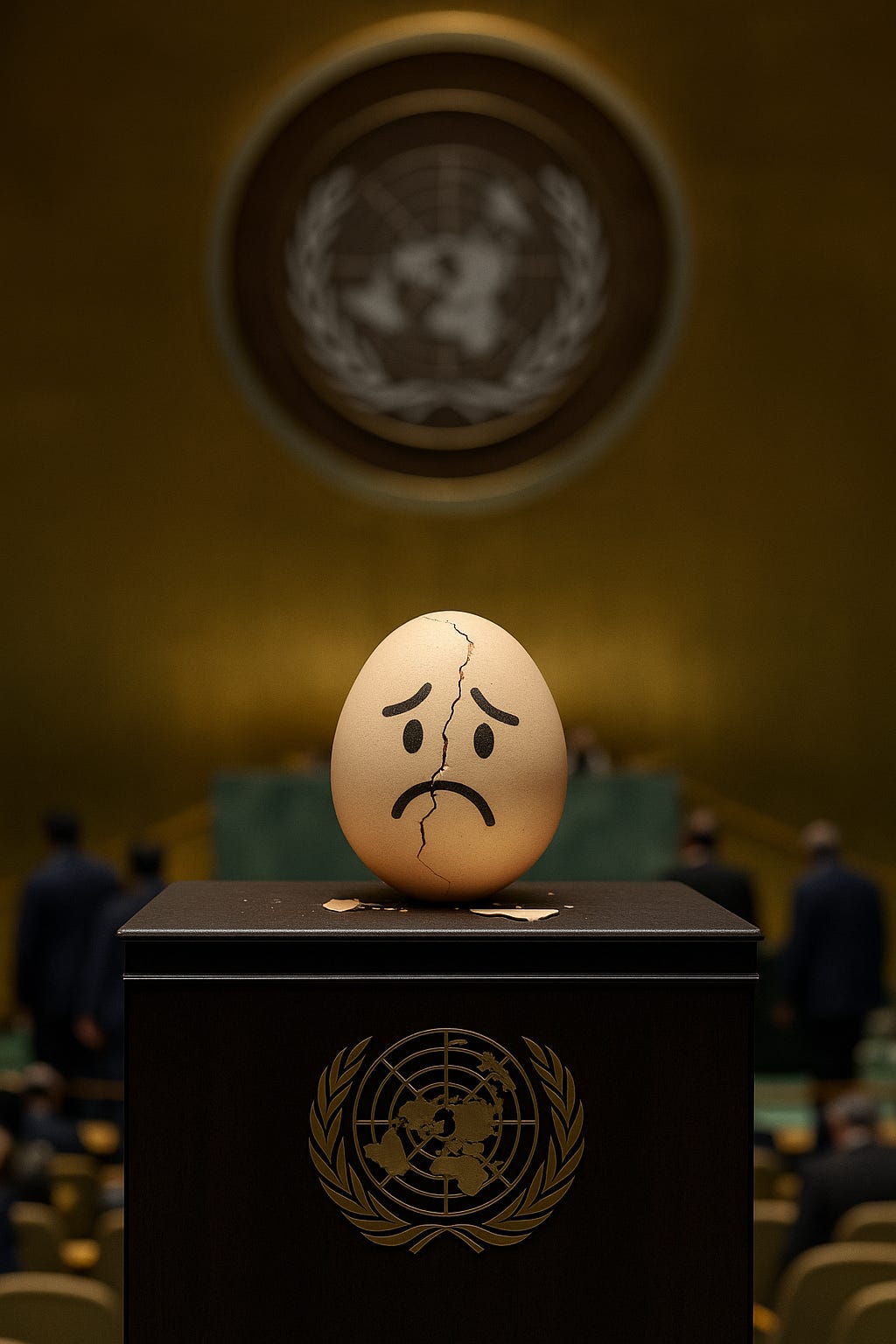
Because while the Sox were out taking swings (and missing too frequently), the celebrity class, the same crowd of moral exhibitionists who’ve spent the past two years preaching justice for Gaza, were suddenly benched when it came time to support an actual peace plan.

Yes, that plan. The one the orange man child’s son-in-law developed to help Dad win an “ignoble” prize. The very same newly unveiled Gaza peace proposal, endorsed by nearly every major Arab nation and supported across much of the West. A plan that could, at long last, free hostages, ease Gazan suffering, and sideline Hamas, the single greatest obstacle to Palestinian dignity and regional stability.

And yet, from the celebrity pulpit that never shuts up? Crickets.

Peter Himmelman captured the vacuum perfectly in his Substack essay Oh, Righteous Performers: Where Are Your Voices Now?, a searing open letter to the same famous faces who fill our feeds with sermons but vanish when the real moral stakes show up.

Instead of showing up for peace, they showed up for the Oscars. Draped not in courage but in red-hand pins, the now-infamous emblem of the Artists4Ceasefire campaign. To some, it’s a symbol of peace. To others, especially Jews who remember the Ramallah lynching of 2000, it’s a grotesque echo of murderers triumphantly holding up their bloodied hands. The insensitive fools apparently did not know the difference or just didn’t care. 

Among those flashing their red palms of performative virtue: Mark Ruffalo, Billie Eilish, Finneas O’Connell, Ava DuVernay, Ramy Youssef, Riz Ahmed, and others. Add to that the Artists4Ceasefire letter signatories—Bradley Cooper, Cate Blanchett, Ben Affleck, America Ferrera, and Tilda Swinton—and you have a full Hollywood starting lineup of the self-satisfied nit-wits. 

And after a deep search through the celebrity universe, here’s what turns up: not one of these self-proclaimed humanitarians has publicly supported the Gaza peace plan. Not one statement. Not one tweet. Not one red carpet moment of courage. A deal endorsed by nearly every major Arab nation, by European allies, by pragmatic diplomats across the spectrum, and not a single Hollywood voice brave enough to say “yes.”

That silence isn’t apathy. It’s shameful self-preservation.

Because peace, like baseball, requires hard work. It’s not glamorous. It’s not scripted. It’s built for fall. Supporting this deal means admitting that the true evil in Gaza isn’t Israel, it’s Hamas. But saying that out loud doesn’t earn “likes”, and the Hollywood ego is allergic to unprofitable and/or inconvenient truths.

As Yossi Klein Halevi of the Shalom Hartman Institute explained:

This plan puts the focus again on Hamas’s evil and on the necessity to remove their ability to determine the future of Gaza. That’s what it’s about. And that focus, that’s the prerequisite for everything else now. This is the essence of what the deal is about. All the rest is peripheral. And in many ways, Israel’s greatest failure, possibly as a result of the way it conducted the war, and maybe as a result of anti-Semitism or anti-Israel sentiment, whatever it might be, is that very quickly, this war shifted from focusing on the evil of Hamas to focusing on Israel’s evil or unjust actions.”

Exactly. The point of this deal isn’t politics, it’s moral clarity. It’s about taking the steering wheel away from the murderous jihadists who’ve driven Gaza into a ditch and giving ordinary Palestinians a real chance at life.

But the “righteous performers” can’t stomach that focus shift. Their silence isn’t neutrality, it’s complicity. They’d rather wear symbolic blood on their lapels than risk alienating their fan base by telling the truth about Hamas.

Meanwhile, Arab nations, the ones who actually live with the consequences, are showing the courage our cultural elite lack. They’ve seen enough. They’re ready for peace.

And yes, let’s be honest: these are the very same nations that for decades have slammed their own doors shut to Palestinian refugees. Egypt, Jordan, Lebanon, Saudi Arabia, they’ve all perfected the art of proclaiming solidarity while quietly closing their borders. Yet even with that history of hypocrisy, they’re still stepping forward to endorse this plan, because they understand what Hollywood refuses to grasp: that peace, however imperfect, is better than perpetual martyrdom.

And since this is still the season of reflection, let’s close on something lighter, and more honest. Last week was also Fat Bear Week, that sacred annual ritual where the people vote not for virtue or victimhood, but for raw, unapologetic girth. This year’s champion: Chunk, the salmon-devouring colossus of Katmai National Park. Chunk didn’t tweet. Chunk didn’t posture. Chunk didn’t moralize. He just ate, slept, lived large, and—unlike Hollywood—earned every ounce of his following.

Chunk 

I myself admit to a form of human hibernation, turning my focus in the fall to bingeing on Redzone football and the baseball playoffs while consuming mass amounts of chicken wings, Doritos, babka, and other health food snacks in the confines of my comfy chair. Fortunately, no-one is following me around with a camera as they do with the bears in Katmai Brooks Falls. But if they did, here is what might be recorded in the archives of the competition (Sandra, don’t look):

Chunkier?

Maybe that’s the lesson of the season and a fitting way to end this post: the Sox fought, Chunk and I ate, and Hollywood preached, only three of them were honest about what they were built for. In the end, the Red Sox showed heart, Chunk and I showed girth, and Hollywood showed its hand—red, and empty.

Be safe out there everyone. And go Blue Jays!

Brad out.
The Jew News Review – Special Edition – September 30, 2025 – “Twenty Points, Zero Chance”

Shalom. 

The Trump administration has just unveiled its 20-point Gaza peace plan with the solemnity of a statesman and the customary swagger of the orange man child. The headlines include: hostages freed, Hamas disarmed, an international caretaker government installed. It all looks promising on paper, the kind of blueprint diplomats dream about. But we are in the Days of Awe, the period between Rosh Hashanah and Yom Kippur when Jews are asked to account for themselves, to choose repentance, renewal, and life. And IMHO, the bitter truth is this: Hamas has no interest in repentance, only in repeating the cycle of violence, repeating the rejection of peace, repeating its core obsession with killing Jews rather than building a home for Palestinians.

That’s the backdrop for Andrew Fox’s timely essay, “Waiting on Hamas with bated breath.” Fox, a renowned expert on urban warfare, suggests Hamas will play the long game. 

“A ceasefire means Hamas can regroup, reconstitute under the radar, even rebrand, and pivot to its next phase. Hamas will use the months and years after the end of hostilities to melt back into Gaza’s social fabric and prepare for an insurgency or revival further down the line. They also know that when the world’s media finally gets into Gaza and sees the destruction, the propaganda they can generate will increase Israel’s international condemnation. Lawfare will escalate.”

It’s a thoughtful take, and well worth your time. I have re-stacked it below. 

Where I part ways with Fox is in holding out even a sliver of hope that Hamas might surprise us. In these Days of Awe, Jews believe even the most hardened heart can repent. But Hamas is not built for “teshuvah”. Its DNA is struggle, not sovereignty. Its creed is rejection, not renewal. Which is why I believe this peace plan, like the ones before it, will be met not with awe, but with scorn.

In the days ahead, leading up to Yom Kippur, Jews will search their souls and pray to be written into the Book of Life. Hamas, by contrast, seems content to scribble only in the margins of death. Trump may bring twenty points to the table, but Hamas has never managed to honor even ten commandments.

I really hope I am wrong. We need to bring the hostages home.

Be safe everyone. 

Brad out.

The Jew News Review – September 27, 2025 – “All the President’s Men, Can’t Put a Palestinian State Together Again”

Shabbat shalom!

And a belated “tip of the kippah” to Robert Redford, a man whose faith in truth-telling, in independent voices, and in disciplined storytelling helped define modern journalism. But for me, All the President’s Men wasn’t just a movie. It inspired me in 1976 to change my college major from Business to English/Journalism and probably cost my parents another semester of tuition, but the additional investment was well worth it. So, thank you Mr. Redford, may his memory be a blessing. 

The quiet persistence of Woodward and Bernstein, the stubbornness of chasing a lead even when no one else cared, those were the moments I replayed in my head when I first picked up a reporter’s notebook. Redford didn’t merely act the journalist, he produced the story. He bought the rights to the book, he consulted with Woodward and Bernstein, he insisted on accuracy, and often telephoned them daily to verify even small details.

In a time when too many believe that raising a flag or issuing a press release is a stand-in for power, we need Redford’s ethos more than ever. The idea that truths matter, that accountability must be earned, and that the gravest sins are those we refuse to spot even when they are spelled out in plain language.

Truth, unlike recognition, cannot be conferred by ceremony. Truth has to be pried loose, verified, and then defended. Which is why the spectacle of Britain, France, Canada, Australia and their fellow travelers rushing to recognize a Palestinian state felt like the exact opposite of what Redford championed. They were not chasing facts or demanding accountability, they were throwing confetti at a narrative, hoping applause would substitute for evidence.

Netanyahu, for all his flaws and theatrics, was right to call it what it was: a prize handed to terrorism, a blank check to Hamas (and Abbas!), a signal that hostage-taking and bloodshed are the price of admission to the club of nations. Recognition before de-radicalization is not statesmanship, it is malpractice. It robs the West of its only real leverage, the ability to say “change first”, then reward.

That leverage mattered. By burning it for the sake of optics, these countries emboldened the very groups they claim to abhor. Hostage-taking, already the grotesque centerpiece of Hamas’s playbook, is now further validated as a strategy. If statehood is a prize won through brutality, then the rational move is more brutality.

The scene surrounding Netanyahu’s trip to the UN said it all. To get to New York, his plane had to take a carefully plotted route, skirting countries that would happily arrest him if an emergency forced a landing. Then, before he even spoke, dozens of delegations staged a walkout, denying themselves the very thing they pretend to prize, dialogue. They left the room rather than hear an inconvenient truth, that rewarding terrorism breeds more terrorism, that recognition without reform is not hope but surrender.

If the West had a Redfordian commitment to truth, here is what would have been required before the words “we recognize” ever left a diplomat’s mouth: complete release of the remaining hostages, dismantling of terror infrastructure, curricula that affirm coexistence rather than glorify martyrdom, explicit recognition of Israel’s right to exist, the dismantling or reform of UNRWA, and penalties that actually bite when commitments are violated. Absent these, recognition is not diplomacy. It is self-delusion.

If you want to know why de-radicalization must be a starting point, not an afterthought, open a Palestinian classroom textbook. In one sixth-grade reader, students are presented with a banner lifted from earlier nationalist writing: “There is no alternative to destroying Israel.” Elsewhere, children are drilled on math problems by counting the number of “martyrs” from the First Intifada, a grotesque exercise in normalizing bloodshed as if it were just another arithmetic word problem. Maps in geography lessons often show every inch of land from the river to the sea as “Palestine,” with Israel erased as though it never existed. This is not cultural nuance, it is indoctrination.

Britain and France insist recognition is a way to “keep hope alive” and “preserve the two-state solution.” In their telling, it is a symbolic gesture meant to reassure Palestinians that peaceful diplomacy has not been eclipsed by Hamas’s brutality. Statehood now, they argue, will strengthen moderates and give reformers something to defend.

That all sounds noble until you notice the absence of evidence. Moderates are not empowered by premature recognition, they are erased by it. Hamas doesn’t see Britain’s vote as an incentive to soften, it sees it as proof that violence pays. And the so-called moderates in Ramallah are left with nothing to trade, no incentive to demand reforms from their own society, because the prize has already been handed out.

The French foreign minister went further, claiming that recognition will “rebalance the playing field” by showing Palestinians that their aspirations are acknowledged. But this isn’t rebalancing, it is rewarding refusal. Imagine if after Munich in 1938, the Allies had said: “Well, we’d better give Hitler some more recognition or he’ll lose hope in diplomacy.” It is the same logic of appeasement, dressed up in 21st-century jargon. The field doesn’t get rebalanced, it gets tilted toward extremism.

Redford’s legacy is a reminder that democracy survives only when people are willing to dig, to question, to expose, and to refuse shortcuts. All the President’s Men worked because it showed two reporters sweating over small facts, not congratulating themselves for big gestures. Western democracies just did the opposite. They congratulated themselves for a symbolic flourish while ignoring the facts screaming in their faces, that the Palestinian leadership they are elevating still exalts terror, still educates its children to hate, and still clings to a fantasy of Israel’s erasure.

Readers of the JNR know that I favor a two state solution. But recognition before reform is a Humpty Dumpty moment. Once you’ve smashed the leverage on the pavement, all the presidents’ men and all the Western diplomats won’t be able to put a credible peace process back together again. If recognition were a currency, the West just printed counterfeit bills and handed them to Hamas. Redford knew better. You don’t build integrity with props, and you don’t win peace by subsidizing fantasies. You earn truth the hard way, or you don’t get it at all.

Stay safe everyone, and try to enjoy the weekend.

Brad out. 

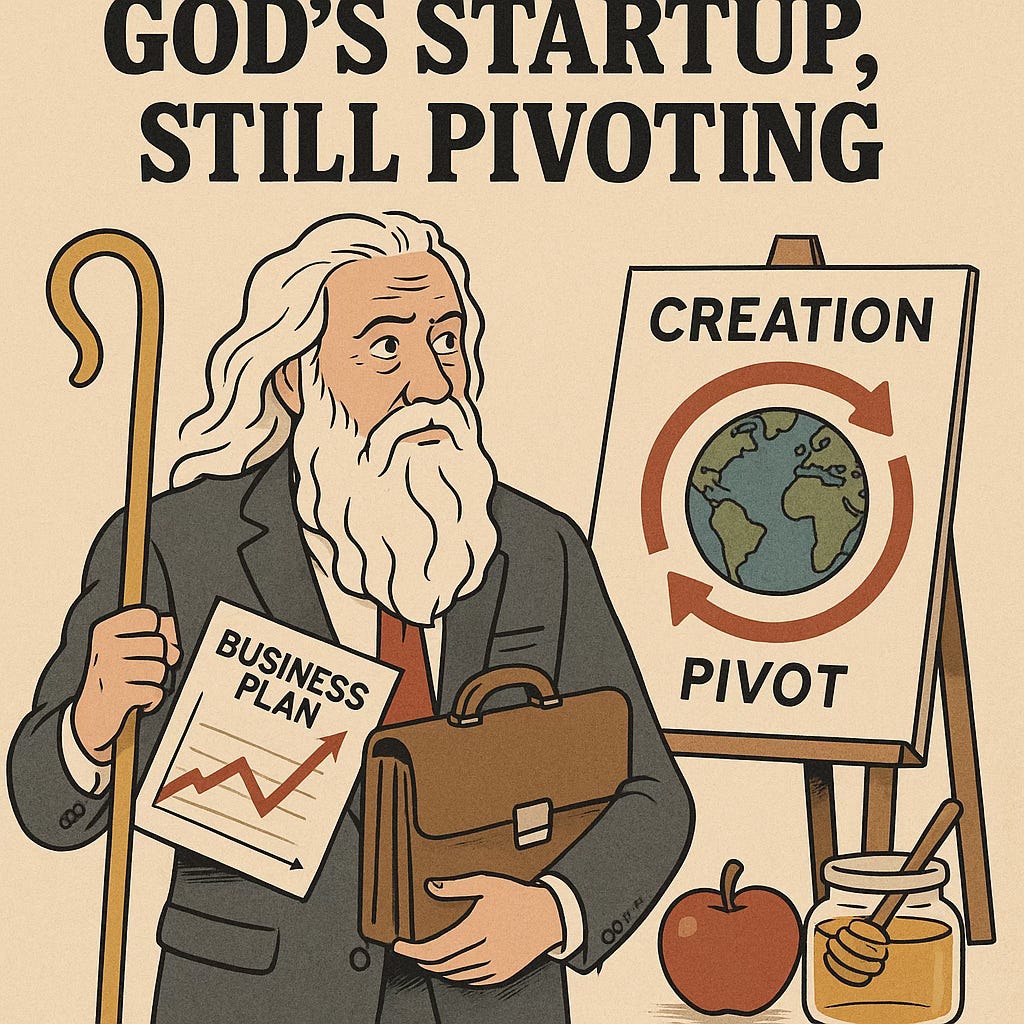
The Jew News Review – September 20, 2025 – “Rosh Hashanah 5786: God’s Startup, Still Pivoting”

Shabbat shalom! And Shanah Tovah to all! 

Rosh Hashanah is supposedly the “birthday of the world.” If you think of creation as a company launch, then this was God’s big IPO day – the cosmic ribbon cutting. Problem is, the founding product came with flaws baked in. The business plan looked visionary on paper, but the execution has been messy: weak governance, hostile takeovers, endless culture wars. Humanity: the original high-burn-rate startup.

That thought hit me hard this year as I wrapped up the Clean Tech Open 2025 with my cousin Ari. We were in the Big Apple this week pitching his idea for scaling ground-sourced heat pumps, a way to slash HVAC costs and keep the planet from choking on its own exhaust. We didn’t “win” the contest, but as the oldest guys in the Clean Tech 2025 cohort, we were floored by the energy of the younger founders. Twenty- and thirty-somethings building real things, launching real ventures, all with the audacity that they can help save the planet from us. Their optimism was humbling. And contagious.

It made me think: creation itself was God’s startup. Year One: raise the seed round (let there be light). Year Two: expand the total addressable market to new verticals (seas, skies, animals). Day Six: hire humans, (oops) big f-ing mistake. Ever since, we’ve been the problem employees, bickering in Slack channels, sabotaging projects, running smear campaigns against one another in the press. If God were a venture capitalist, She’d have fired the founders centuries ago. Instead, we limp along, pivoting desperately, hoping not to get delisted from existence.

And boy, do we need a pivot now. Antisemitism is back not just with a vengeance, but with a social media strategy. It’s viral, algorithm-boosted, and influencer-approved. Old tropes got a TikTok makeover, and suddenly your kid’s “For You Page” is serving up Protocols of the Elders of Zion clips between cat videos. We wanted “Never Again.” What we got was “Again, But Make It Trendy,” with better SEO and even better marketing. 

Israel too has pivoted, though not in ways that make us cheer. From “Start-Up Nation” to Nut-and-Yahoo’s latest vision, “Super Sparta,” admired more for its firepower than for its brainpower. Israel is edging from miracle brand to pariah stock. What was supposed to be the ultimate insurance policy of Jewish history is now a magnet for boycotts, sanctions, and diplomatic isolation. The dream was normalcy; the reality is perpetual crisis management where it’s also become the world’s favorite excuse to cancel Jews all over again.

And then, looming like an orange mushroom cloud, is Trump: the “revenge tour” candidate turned twice-elected chaos muppet. His business model is grievance, and he’s franchising it nationwide. Free speech, political norms, the rule of law: they’re just competitors he wants to drive out of the market. And millions are buying shares.

So yes, Rosh Hashanah feels like a startup anniversary where the champagne has gone flat, the cash burn rate is unsustainable, and the founders are fighting on the boardroom floor. God’s startup is still pivoting, 5,786 years later.

But here’s the stubbornly Jewish part: we keep showing up anyway. That’s what struck me about those Clean Tech kids. They’re not naïve; they’re relentless. They don’t see a doomed startup, they see an opportunity to rebrand, to fix the model, to keep iterating until it works. And isn’t that exactly what Rosh Hashanah is about? Not perfection, not utopia, but the courage to pivot again?

Maybe the apples and honey aren’t just saccharine symbols. They’re seed funding for hope. A way of saying: yes, the world is broken, but we’re reinvesting anyway.

So raise the glass, dip the apple, drizzle the honey. And when you say Shanah Tovah, don’t just wish for sweetness. Insist on a better pivot. Because God may have been the original founder, but it’s on us—the stubborn interns, the late-stage co-founders, the reluctant CEOs of history—to keep the startup alive.

Pivot well everyone. Make good decisions, and be safe out there.

Brad out. 

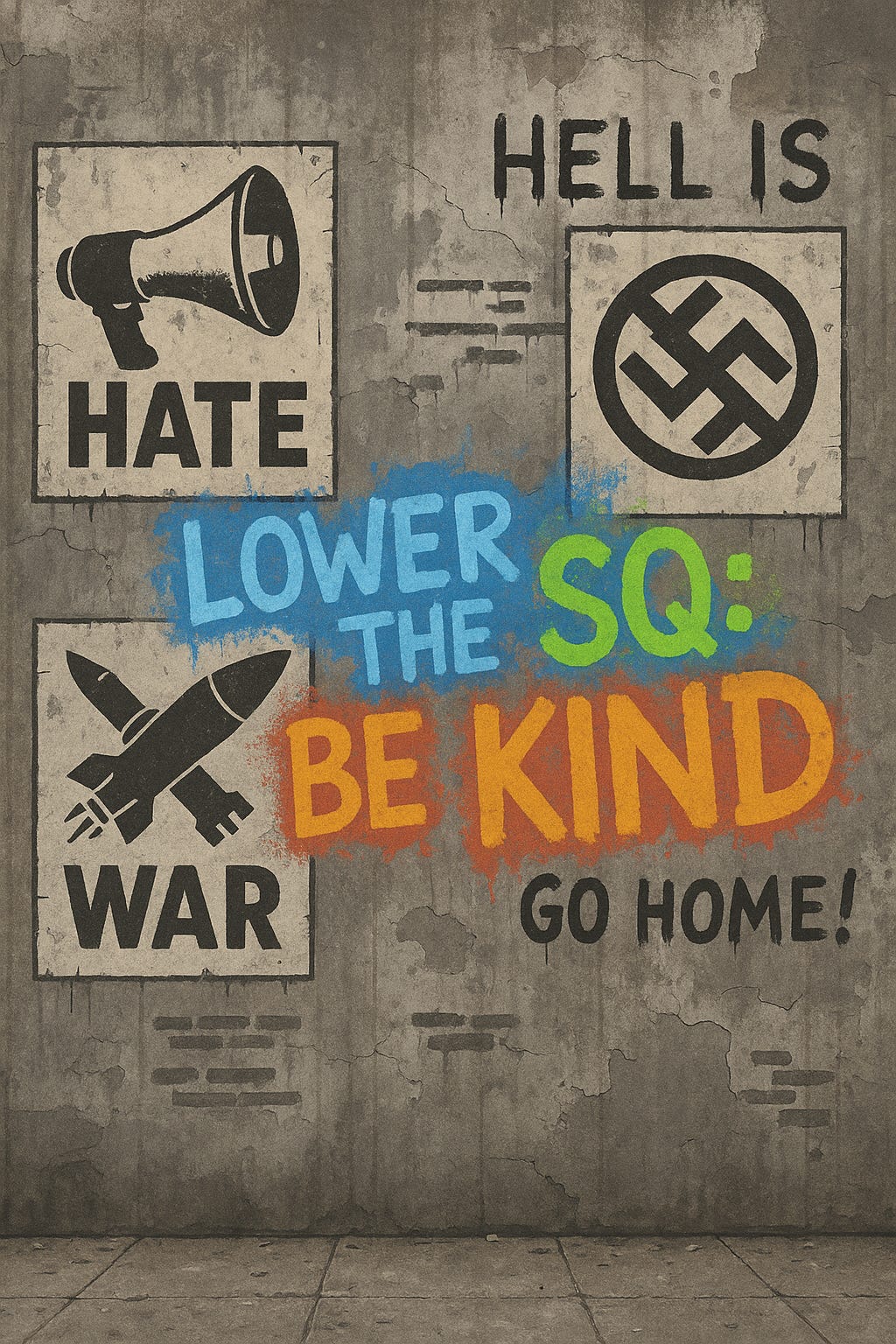
The Jew News Review – September 12, 2025 – “Lowering Our Stupidity Quotient (SQ) with Kindness”

Shabbat shalom.

Oy vey iz mir, what a week. 

My heart goes out to the family of Charlie Kirk. Although he was a “steadfast friend of Israel”, he was better known as a man of far right conservative opinions, a flame thrower in the culture wars, and very popular with the younger generations. He was a modern day younger version of Rush Limbaugh. I was no steadfast friend of Mr. Kirk or most of his opinions. I did not follow him, or his somewhat amazing career, but his influence in the MAGA world was said to be unrivaled. 

Unfortunately, political violence is having its renaissance. In a world lurching toward illiberalism, assassinations, shootings, and bombings aren’t aberrations anymore, they’re mile markers on the bumpy road back to barbarism. From America to Israel to Europe, the political arena is becoming a shooting gallery, and the rest of us are left to wonder whether we’re citizens of democracies or extras in a new Mad Max sequel. 

This week also marked the anniversary of 9/11, which for me is not an abstraction. My cousin, Robin Kaplan, was on one of the planes that hit the World Trade Towers that morning. Her loss is a personal reminder that political violence is never just an event on TV – it shatters families, hollows out communities, and leaves scars that don’t fade with time. 

And yet, here we are, two decades later, watching violence metastasize again. If political violence is the disease, then social media is the super-spreader that if unchecked, could create a new strain of violence that ends who knows where. Most social media has devolved into platforms for nazi porn, and in-between a few good recipes, now feeds up snuff material featuring the brutal death of not only real human beings, but of civil society itself. Every algorithm-juiced outrage cycle ratchets up our collective temperature, and what we used to call “public discourse” has now curdled into a mosh pit of rage. Which brings me to a modest proposal: TURN IT OFF! Not forever, not in some performative “I deleted Twitter/X, now I’m pure” way, but enough to lower what I call our SQ – our Stupidity Quotient.

We all know IQ, the supposed measure of brainpower. SQ, by contrast, is the measure of how much collective dumbness a culture tolerates, amplifies, and eventually normalizes. And make no mistake: our SQ is red-lining. Look no further than the reactions to Charlie Kirk’s assassination. Within minutes, conspiracy merchants were shrieking that the “Deep State” staged it. Meme warriors on the left celebrated with photoshopped shooting-range targets. On the right, influencers claimed the real scandal wasn’t the murder itself, but that Democrats weren’t condemning it fast enough. And the numerology freaks (God help us) were already decoding the shooting’s timestamp as evidence of divine judgment or an Antifa ritual. That’s not political discourse; that’s stupidity, weaponized and crowd-sourced.

And the SQ didn’t stop there. A Nasdaq sustainability strategist was fired for social-media posts celebrating Kirk’s murder. A Carolina Panthers staffer lost his job for suggesting the victim’s rhetoric “deserved” retaliation. MSNBC cut ties with Matthew Dowd for remarks that linked incendiary speech to the violence itself. Even Stephen King had to walk back a viral post falsely claiming Kirk had advocated “stoning gays.” Each of these wasn’t just a career implosion; it was another datapoint in how a culture drunk on SQ can’t distinguish between critique, cruelty, and conspiracy.

So yes, by all means, rage against assassinations, shootings, and bombings. But if you want to stop fueling the fire, step one is simple: log off, cool down, and find ways (real, embodied, human ways), to lower the SQ. 

Which brings me to a counterweight in these dark days: random acts of kindness.

The week’s news reads like a blood-stained scroll. Charlie Kirk cut down. Another school shooting in Colorado makes barely a blip in the national attention span, because what’s another few dead kids in a land where firearms outnumber people? Israel takes out Hamas negotiators in Qatar with a precision strike that looks, from one angle, like cold strategy and, from another, like a plotline from Fauda that escaped the writers’ room. The world is a slaughterhouse this week.

So let’s talk about kindness. Not because it cancels out the horrors, but because without a counterweight, we risk sinking into the pit.

Jews, of course, have a long, messy tradition of kindness. Not always pretty, not always perfect, but defiantly human in a world hell-bent on smashing the human out of us. Take the concept of chesed which means, “loving-kindness”. It isn’t an optional extra, like sprinkles on a sundae. It’s one of the bedrocks. And in moments when the world is busy reenacting a Quentin Tarantino fever dream, chesed is how Jews remind ourselves that survival isn’t enough. You’ve got to survive with soul.

Consider the Jewish humanitarian groups who’ve stepped outside the Jewish world entirely. In 2025, Jewish aid networks helped fund food convoys for Sudanese refugees fleeing ethnic slaughter, and Israeli medical NGOs sent teams to earthquake-ravaged Turkey, setting up mobile clinics in villages where the government had all but vanished. These aren’t grand geopolitical gestures; they’re acts of defiance against despair.

Sometimes the kindness is laced with irony. In Gaza, even now, Israeli medics have treated Palestinian children while under rocket fire. It’s the maddening paradox of this war: the same IDF that bombs a weapons depot in the morning may be operating a field hospital in the afternoon. 

Then there are quieter, stranger stories. The Chabad rabbi in Kathmandu who runs a soup kitchen for stranded Israeli backpackers, or the Jewish doctor in Florida who, after a hurricane, drove around neighborhoods with his pickup truck turned into a mobile pharmacy, handing out insulin from an ice chest. No cameras, no press releases. Just chesed.

But maybe my favorite Jewish kindness stories are the kind of weird ones. Like the elderly Jew in Chicago who, after being mugged, refused to press charges and instead showed up at the kid’s sentencing with a job offer at his hardware store. Or the Hasid in Brooklyn who noticed a homeless man outside his building every Friday and started slipping a bottle of grape juice and a challah into his bag. The homeless man, not Jewish, began to call it “my Sabbath starter kit.”

And here’s the good news: it isn’t just Jews. Globally, researchers have tracked what they call the “benevolence bump”, a surge in kindness that spiked during COVID-19 and, against all cynical expectations, never faded. Helping strangers is still about ten percent higher than before the pandemic. It turns out that even after years of doomscrolling, our species hasn’t completely forgotten how to hold the door open, hand a meal to someone who’s hungry, or slip a few bills into a stranger’s GoFundMe.

Here’s the thing: random acts of kindness don’t stop bullets, drones, or fanatic ideologies. They don’t resurrect a dead cousin or erase the sight of blood gushing from an assassin’s bullet or bring hostages home. But they are a middle finger to despair. In a week where the news cycle feels like it was programmed by Hieronymus Bosch on meth, kindness is the Jewish way of saying: you don’t get my soul along with my suffering.

That’s the juxtaposition I keep coming back to. Random acts of madness such as assassinations, shootings, and bombings, are loud, dramatic, and headline-grabbing. Random acts of kindness are quiet, often invisible, occasionally ridiculous. But they accumulate. They build an alternate record of what it means to be human, Jewishly or otherwise.

So yes, the world is a mess this week. It probably will be next week too. But somewhere a rabbi is ladling soup, a Jewish grandma is covering the medical bill for a stranger, and some kid in Tel Aviv is giving his seat on the bus to an old man. None of those will trend on Twitter/X. But they are the yeast that makes the bread rise.

And maybe, just maybe, every time someone commits a little act of chesed, like slipping bread to a stranger, sheltering a refugee or immigrant, or forgiving a thief, they’re not only keeping the world upright, they’re dialing down our SQ. Because nothing lowers the Stupidity Quotient of a culture faster than kindness, performed without hashtags, without headlines, and without expectation of return. Lowering the SQ won’t come from politicians or pundits. It’ll come from us, handing out bread instead of bile. 

So do a mitzvah this week. Shut off your social media feeds and commit a random act of kindness. 

And please be safe out there.

Brad out. 

This post is dedicated to Robin Kaplan, and for every life shattered by senseless violence.

The Jew News Review – September 6, 2025 – “Day 700: Why Israel Can’t Afford a Fake Peace With Hamas”

Shabbat shalom! 

Sadly, we have just passed day 700 of Israel’s war with Hamas. Seven hundred days since October 7, 2023, the day Hamas carried out the largest massacre of Jews since the Holocaust. Seven hundred days of tunnels and rockets, funerals and rubble, endless cease-fire talks that, lately, yield nothing but more stalling. And above all, seven hundred days of agony for the hostages and their families, who wake each morning not knowing if their loved ones are still alive in Hamas’s tunnels of cruelty.

The attempted genocide of that day did not end with its victims. It tore something open in the Israeli psyche. They live now with a rawness they cannot shake: the knowledge that their neighbors danced in the streets as Jews were slaughtered, that women were raped as trophies, that children were dragged screaming into Gaza and remain there still. The damage is not only physical but spiritual. Israelis carry both the grief of October 7 and the burden of a world that treats their self-defense as a crime.

It is against this backdrop that we must ask: how does one fight a war against an enemy like Hamas? Unlike the Nazis, who however diabolical, cloaked their genocide in euphemism and bureaucracy, Hamas aired their atrocities live. They paraded women through the streets, filmed themselves burning families alive, and posted the carnage online. Hitler said “resettlement”; Hamas says “resistance.” Evil once wore a mask. Now it boasts openly.

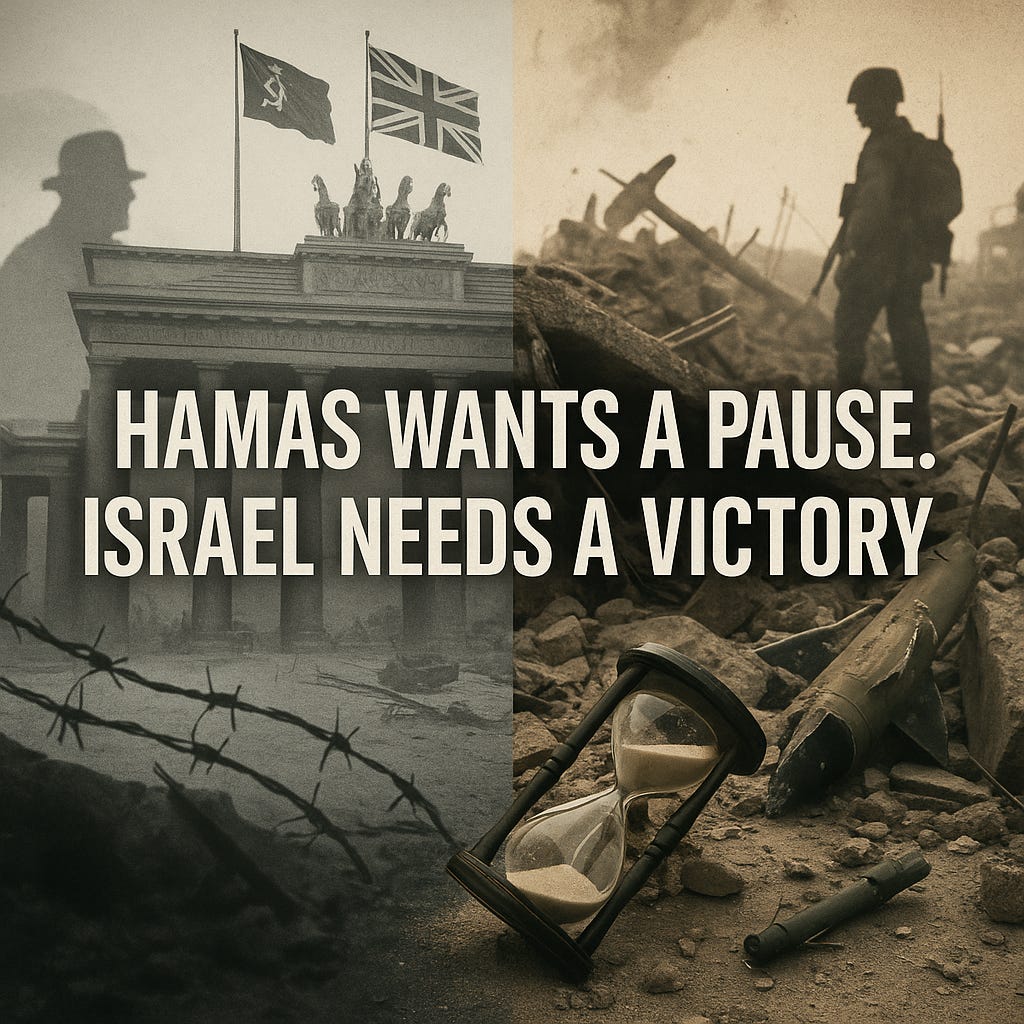
The Allies in World War II understood a fundamental truth: appeasement is suicide when your adversary’s ideology is extermination. Churchill warned, “You cannot reason with a tiger when your head is in its mouth.” The Allies didn’t negotiate with Hitler; they demanded unconditional surrender. Berlin burned not out of cruelty but necessity.

Israel faces the same reality but under different rules. Hamas has perfected a trick Hitler never mastered: embedding themselves in hospitals, schools, and mosques so every bomb dropped becomes propaganda. Allied commanders never faced such a trap. Israel does, has fallen deep into that trap, and is now pilloried for daring to fight back.

The ongoing cease-fire negotiations illustrate the futility of compromise. Hamas refuses to surrender, disarm, or give up its rule in Gaza. What they demand is a “pause”, a cease-fire that would leave their power intact, their ideology unbroken, and their hostages still in chains. Imagine if Hitler had asked the Allies in 1945 for a cease-fire that left the Wehrmacht in Berlin and the SS in charge of the camps. It would have been absurd. Yet today, the world pressures Israel to accept precisely that.

This has left Israel in a position the Allies never faced: it has become a pariah. In 1945, the Allies emerged from the rubble of Europe as liberators. Civilian deaths in Dresden or Hamburg were tragic but accepted as the cost of ending tyranny. Israel, by contrast, is condemned not because its war is unjust, but because of the way it is forced to fight it. Images of destruction dominate global screens, blotting out the moral clarity of the cause. The mainstream media gobbles up and amplifies Palestinian propaganda turning it into social media click bait that not only feeds anti-Israel sentiment, but also ignites and fuels historic levels of antisemitism in the Jewish diaspora around the world. 

And yet, what is the alternative? To fight with “restraint” against such zealotry is to guarantee stalemate, hostage deaths, and Hamas’s survival. To fight as the Allies once fought is to invite condemnation and isolation. Win the war and lose the world, or lose the war and invite another October 7.

This raises the uncomfortable question of complicity. Yes, there are children beneath the rubble, innocent in their suffering. But Hamas was elected in 2006 and never ousted. Crowds cheered on October 7. Schools teach martyrdom. Most damning of all, not a single Palestinian has risked themselves to provide information about the Israeli hostages. Even under Nazi terror, there were Europeans who defied the Gestapo to hide Jews. In Gaza? Silence. Where are the Schindlers? That absence of moral courage is itself an indictment.

But Israel’s struggle is not only about Israel. The world itself has a stake in the defeat of Hamas and the jihadist ideology it embodies. A movement that sanctifies terror, revels in atrocity, and brands genocide as “resistance” cannot be allowed to survive. Its vanquishing is not merely an Israeli imperative but a global one. Yet, astonishingly, the world flirts with rewarding this terrorism by granting Palestine statehood at the United Nations this September. To do so would be to hand Hamas a victory it could never achieve on the battlefield and signal that murder and hostage-taking pay. It would be like the Munich Agreement in 1938 that rewarded Hitler for his agression, dressed up in diplomatic language.

Military victory alone is not enough. The Allies understood this. Nuremberg was not just punishment, but education. German society was forced to confront its complicity. Schools were rebuilt, curricula rewritten, propaganda dismantled. Over time, Nazism went from proud ideology to global shame. Israel must insist on the same for Gaza: not just the destruction of Hamas’s tunnels and arsenals, but the dismantling of its ideology. Gaza’s textbooks must change. Its mosques must stop preaching martyrdom. Its political culture must learn that power flows from compromise, not jihad.

This is not fantasy. The Arab world itself has begun a process of de-radicalization. Saudi Arabia, once the prime exporter of Wahhabi jihad, has reined in clerics, rewritten textbooks, and turned toward modernization. The UAE has built a model of pragmatic Islam that tolerates Jews, hosts interfaith conferences, and prizes economic growth over holy war. Even Egypt and Jordan, once sworn enemies, have kept peace with Israel for decades. If Saudi Arabia can de-radicalize after 9/11, if the UAE can pivot from Salafi preachers to the Abraham Accords, why not Gaza?

This is why Richard Haass argues in Foreign Affairs that Israel cannot settle for permanent occupation. A two-state solution is not a gift but a necessity. It is Israel’s only chance to remain Jewish and democratic without being consumed by perpetual war. Just as the Allies rebuilt Germany with the Marshall Plan, Israel and its partners must rebuild Palestine with a program of de-radicalization and state-building. It will take time. It took decades for Germans to own their shame. But history shows it is possible, if reconstruction follows destruction.

So yes, Hamas earns the label “worse than Nazis.” Not in scale, but in shamelessness, in reveling in bloodshed, in the silence of those who cheer or stay quiet while atrocities are committed in their name. Israel must finish what the Allies once finished: the unconditional defeat of genocidal ideology. But the story cannot end there. Churchill warned in 1946 that “the empires of the future are the empires of the mind.”Victory without reconstruction is merely the prelude to another war.

It happened in Germany. It is happening in Saudi Arabia and the Emirates. It can happen in Palestine. But only if the world insists on de-radicalization as surely as it once insisted on de-Nazification. And if today’s cease-fire negotiations teach us anything, it is this: peace cannot be built on Hamas’s terms. It can only begin once Hamas, like the Nazis before them, is stripped of both power and legitimacy, even if doing so leaves Israel condemned in the court of world opinion.

Stay safe everyone!

Brad out. 

Thanks for reading The Jew News Review! Subscribe for free to receive new posts and support my work.

The Jew News Review – August 29, 2025 – “We Are What We Celebrate!?”

Shabbat shalom!

In his recent book, The Haves and the Have Yachts, Evan Osnos paints a grimly comic portrait of the billionaire class. I met Osnos recently at a book festival, and after his presentation, I asked him to compare the robber barons of the gilded age to today’s tech billionaires in terms of their level of philanthropy. His answer: No comparison. The gilded age barons were orders of magnitude more philanthropic. And he cited as an example, the world’s current richest man, Elon Musk, whose largest public demonstration of philanthropy so far was to bankroll Ad Astra—a private school he founded on the SpaceX campus, where several of his own children attended! 

Musk is just one example of this new class of tech billionaires who, instead of pouring their obscene wealth into schools, libraries, hospitals, or climate solutions, are sinking it into apocalypse bunkers, mega yachts, private islands, and escape hatches to Mars. Most of their investments are not in our shared future, but in their own private exit strategies. Their yachts become glossy magazine spreads, their retreats are whispered about by tech bros like some kind of mythical kingdoms, and their half-baked techno-utopias get treated as “visionary” instead of sociopathic. I guess when you have “Fuck You” money, it’s pretty easy to just say “fuck you” and spend another gazillion on some nuclear protected Shangri-La at the bottom of an old missile silo. 

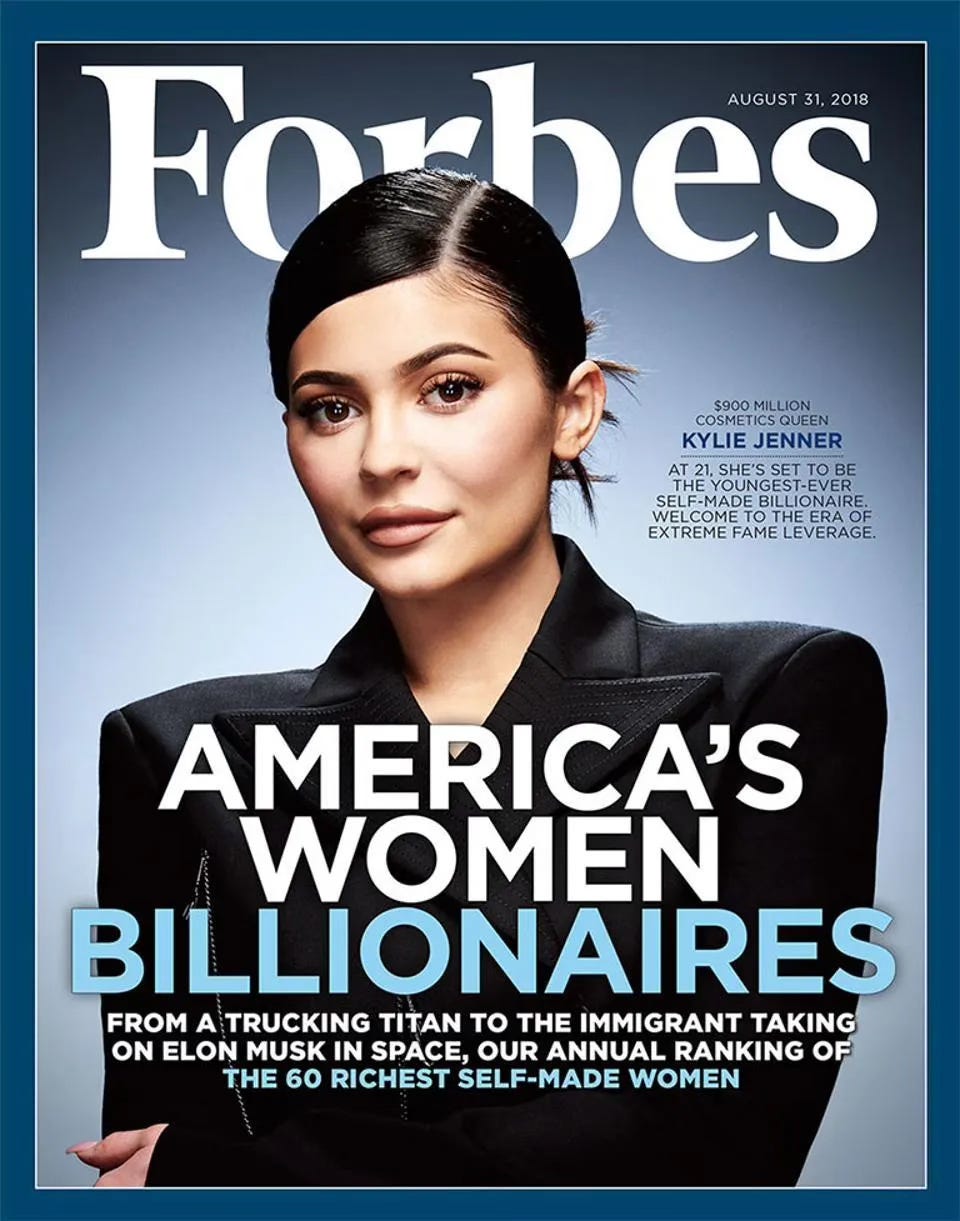
And here’s the kicker: not only do we let them get away with a complete lack of stewardship for our country and the planet, we even celebrate them. They are adorned on the covers of business magazines, their fortunes erroneously perceived as “self made” even though almost every fortune in the US not inherited is at least partly the product of networks, publicly paid for infrastructure, and institutions (social, educational, transportation, legal, political, security, health, etc) that the “self made” billionaire holding the fortune had nothing to do with. In other words, they could not have made their fortunes without other people and the institutions all those people paid for. 

This is not a “tax the rich” screed, although I do believe they should be paying a greater share of keeping our systems and infrastructure in shape to support the next generations of “self made” billionaires. No, I am a firm believer in our current state of capitalism, whatever its many flaws and growing disparity between the wealthy and not wealthy. But I worry about the message this new generation of “self made” billionaires is sending to future generations. And that’s where the phrase I heard on a podcast the other day comes crashing in:

we are what we celebrate.

If that’s true, then what does it say about us?

Because as we worship the billionaires who are preparing for the end of the world instead of preventing it, we are applauding those same men who dig literal holes in New Zealand to hide from the collapse of the society they helped destabilize. We are celebrating the very people sprinting for their private planes (presumably with their pilot’s families) while the rest of us wait out the apocalypse at the local pub. 

And the statistics drive it home. As The Haves and the Have Yachts points out, 25 hedge fund managers make more money than all the kindergarten teachers in America combined. Let that sink in. The people entrusted with shaping the next generation are, collectively, worth less than a couple dozen men who shuffle money around like poker chips. And yet it’s the hedge fund guys who get the magazine profiles, the yacht spreads, the recognition and applause. If we are what we celebrate, then we’ve chosen the wrong heroes.

This isn’t a new debate. More than a century ago, Andrew Carnegie, in his Gospel of Wealth, wrote that the billionaire should see himself as “but a trustee for the poor” because his wealth is not his alone. He is simply “entrusted for a season with a great part of the increased wealth of the community.” And because the billionaire’s wealth is not his alone, Carnegie argued, he has a duty to give that wealth away in whatever manner he thinks will best benefit the community. As brutal a capitalist as he was, at least Carnegie recognized the important role of stewardship that comes with the privilege of wealth. 

Those who don’t are, in Carnegie’s eyes, moral monsters: the human equivalent of dragons who hoard wealth and breathe their last on heaps of gold. “The man who dies thus rich dies disgraced,” Carnegie famously concluded. Harsh words were not enough for such miscreants, however. Their wealth should largely be confiscated, he argued. “By taxing estates heavily at death the state marks its condemnation of the selfish millionaire’s unworthy life.” If that was Carnegie’s view in the age of steel, how damning would his words sound today, when billionaires sink fortunes into rockets and bunkers instead of schools and communities? 

But this isn’t just about selfish billionaires. It’s also about the cultural diet we’ve chosen. America doesn’t celebrate community builders; it celebrates empire builders. We don’t canonize teachers or social workers or climate scientists, we canonize moguls with clever tax attorneys. And if we are what we celebrate, then it’s no wonder our collective soul resembles a luxury bunker that is sealed off from the world, lit by fluorescent paranoia, and stocked with creature comforts that will probably never serve any useful purpose. 

Israel offers an interesting counterpoint (there is always a Jew angle in the JNR!). The Israeli calendar puts Yom HaZikaron (Memorial Day) right before Yom Ha’atzmaut (Independence Day), grief leading directly into celebration. The message is baked in: independence isn’t a yacht you hide on, it’s a collective achievement built on sacrifice, memory, and shared responsibility. Compare that to America’s Memorial Day, now better known for Target sales and Costco barbecue ribs. Our rituals have been hollowed out, leaving only smoked meat and discounts.

And of course there is the orange man child: a living tribute to a nation that celebrates fakes and gilded, narcissistic morons. Trump 2.0 has taken the spectacle out of the campaign arena, and installed it in the White House itself while trampling on the rose garden as well as our institutions and political norms. What used to be carnival rallies are now daily acts of governance-as-performance, with cruelty not just as the main act but as official policy. Immigration roundups staged for TV cameras, cabinet meetings turned into ass-kissing loyalty pageants, and executive orders rolled out like halftime shows. This isn’t a government, it’s a reality TV show, with state power as the prize. And if we are what we celebrate, then America today is celebrating vengeance and kleptocracy dressed up as leadership.

But here’s the thing: celebration isn’t trivial. It’s formative. It shapes what kids aspire to, what adults value, what societies replicate. When we elevate athletes, we inspire play. When we elevate scientists, we inspire discovery. When we elevate billionaires and bunker culture, we inspire retreat, selfishness, and the normalization of inequality.

That’s why the phrase we are what we celebrate sticks with me. It’s not just a bumper sticker, it’s a warning. A country that worships billionaires will get more billionaires, and fewer communities that can survive them. 

But here’s where I want to complicate the picture. The Haves and the Have Yachts rightly skewers the class of billionaires stockpiling bunkers and yachts as lifeboats. Yet it would be dishonest to pretend they all fit the caricature. There are others, (who seem to be the exception rather than the rule) who understand that wealth can build, and heal, and transform and is not just a golden parachute. 

Think of MacKenzie Scott, whose billions have been quietly fire-hosed into community colleges, food banks, and grassroots organizations with an almost reckless generosity. Or Warren Buffett, who has pledged away most of his fortune through the Giving Pledge while reminding us that dynastic wealth is corrosive to democracy. Or Bill Gates, for all his flaws, who has arguably saved more lives through vaccine programs than most governments have managed in a century. Even George Soros, the favorite boogeyman of conspiracy theorists, has put billions toward building democratic institutions and defending human rights in fragile places.

These are not perfect people, and philanthropy is not a substitute for fair taxation. But when the alternative is tech moguls buying bunkers in New Zealand or commissioning rockets to Mars, it matters whom we celebrate. It matters to elevate the billionaires who lean into responsibility, not the ones who lean on the escape hatch.

Because in the end, we are what we celebrate. If we continue to throw our applause at yachts and bunkers, then we’ll get more yachts and bunkers—and fewer bridges, schools, and vaccines. If instead we celebrate the wealthy who put their fortunes back into the bloodstream of society, we might just remind ourselves that shared survival is worth more than private escape. And the mega wealthy might just keep the pitchforks from invading the castle. 

The choice is still ours: to have, or to have yachts.

Be safe out there everyone. When the apocalypse comes, I will meet you in the pub!

Brad out.

The Jew News Review – August 23, 2025 – “The truth lies in the shadows”

Shabbat shalom!

The horror in Gaza continues to rattle my sensibilities. I’m not sure what the F is going on there anymore. Thinking about the current situation there, I am reminded of the TV show “House” where the good, but cynical doctor House would admonish his staff about their patients, that “everyone lies”. That is how I feel about all the actors in this most abysmal Gaza horror show. All the major actors lie: Bibi and his coalition of nut jobs, Hamas, Palestinians, the United Nations, and worst of all, the mainstream media. 

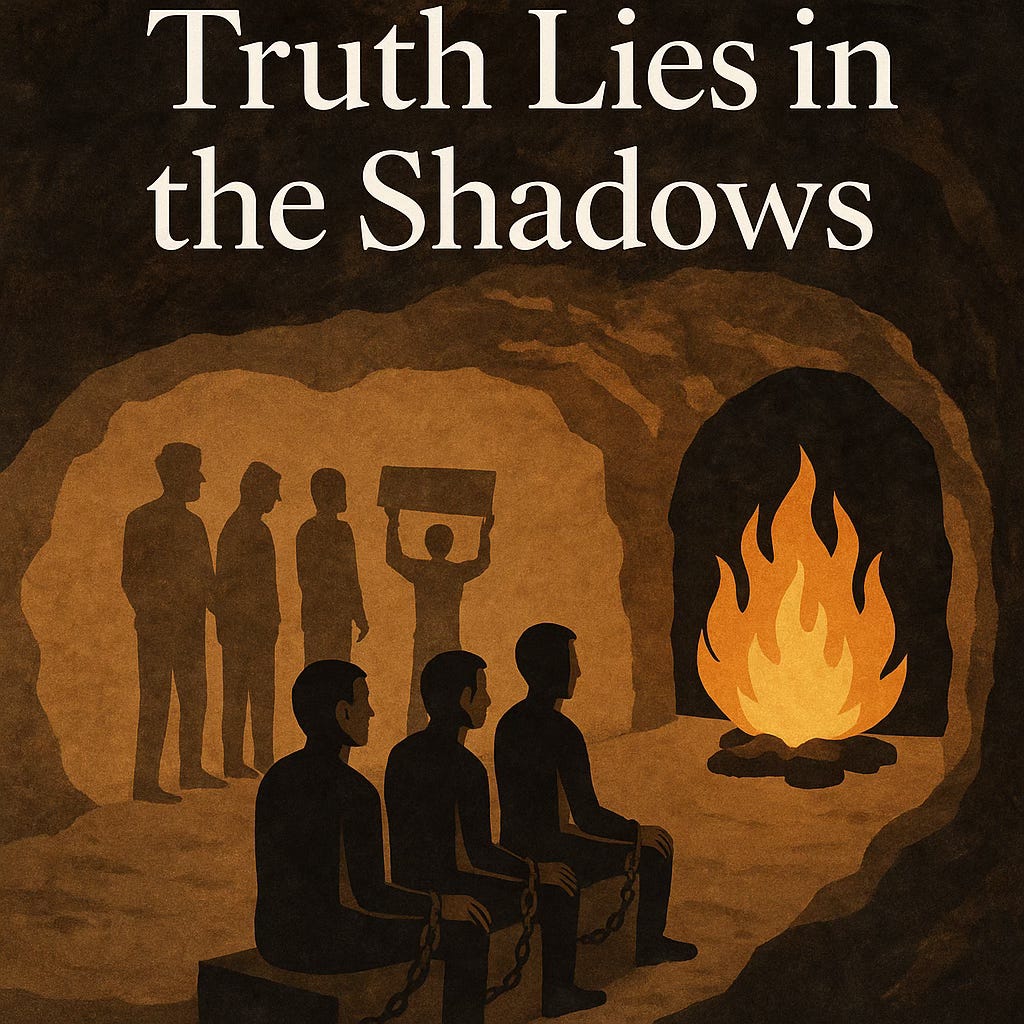
The Greek philosopher Plato told us a story about prisoners chained in a cave, forced to watch shadows on a wall and mistake them for reality. They never saw the fire behind them, let alone the actual figures casting the shadows. The lesson was clear: truth is not what flickers in front of your eyes, but what lies hidden in the shadows, waiting to be sought and revealed.

Today the Gaza war has its own cave. And the shadows have grown darker still. This week, the world’s leading authority on food crises, the Integrated Food Security Phase Classification, formally declared a famine underway in Gaza City. It is the first such declaration in the Middle East. More than half a million people are said to be in catastrophic conditions, with children suffering the brunt of hunger and disease. Innocent civilians are paying a horrendous price for a war they did not choose.

The suffering is undeniable. But the shadows still mislead. A famine in Gaza does not prove Israel has adopted a deliberate policy of starvation, which would be a heinous war crime. It shows instead how Hamas’s diversion of aid, Israel’s ill considered policy halts, and the collapse of international coordination have converged into a man made catastrophe. The fire behind the shadows is still there, but few are willing to turn their heads toward it. And Bibi’s denials only fan the flames that cast even darker shadows. 

Israel made a huge strategic error when it briefly stopped all aid from entering Gaza in early March 2025. Yes, there was an estimated six month surplus of supplies already inside the territory, (a fact ignored or buried by the media) but the optics were catastrophic. Even if the cutoff was temporary and no Gazan would have gone without food for months, the policy gave Hamas a propaganda gift wrapped in blood red ribbon. Headlines screamed starvation while omitting mention of those warehouses.

At the same time, Israel and its U.S. backers rolled out the Gaza Humanitarian Foundation, positioning it as a replacement for UN led aid. It was a strategy I once agreed with, bypassing UN pathways that Hamas had long manipulated. But its execution was disastrous. Instead of restoring impartial aid and running the new system in parallel, the GHF’s militarized, centralized distribution centers, complete with biometric screening and contractor guarded hubs, became choke points. Aid groups rebelled, demanding a return to the UN system. The optics were worse than the March cutoff, and the media ran with the shadow: Israel weaponizing hunger. The fire behind the wall never got seen.

Plato’s allegory reminds us that escaping the cave requires confronting reality, not shadows. A powerful voice bringing some of that reality is Eitan Fischberger, writing recently in Future of Jewish Substack. After spending time embedded with the IDF inside Gaza, she described walking past “pallets of flour, bottled water, diapers, medical supplies, and jars of baby food — provided by the World Food Programme, UNICEF, and donor countries — sat untouched while people just miles away searched for their next meal.” Those supplies weren’t blocked by Israel. They had already cleared the checkpoints. They were stalled because the United Nations refused to deliver them. Fischberger’s argument is blunt: “The supreme aim for the UN isn’t helping Gazans; it’s maintaining control over the humanitarian system that keeps it relevant.”

She also pointed to UNRWA’s longstanding entanglement with Hamas, from employing staff linked to terrorism to storing weapons in schools and clinics. Whether or not every Israeli intelligence claim holds up, the evidence of deep rot is undeniable. Her conclusion is clear: famine in Gaza is driven not only by war, but by an aid ecosystem that Hamas exploits and the UN refuses to reform.

That conclusion reinforces the larger point: this crisis is not Israel’s singular moral failure but the collapse of a corrupt aid structure that international institutions refuse to confront. And yet, in the cave of global opinion, the shadow projected is that of an Israeli policy of starvation.

From that moment, the accusation hardened into a permanent narrative: Israel is deliberately starving Gaza. The UN repeats it, human rights groups echo it, and especially The New York Times gives it journalistic weight. But scratch beneath the surface, and the framework collapses.

Israel has allowed tens of thousands of trucks carrying food, water, and medicine into Gaza since October. Egypt and Jordan have participated in distribution. The real choke point is Hamas, hijacking convoys, hoarding fuel, taxing aid to fund its terror infrastructure. Satellite images and eyewitness accounts confirm warehouses brimming with relief while civilians queue outside. Yet The New York Times prints front page photos of skeletal children paired with captions like “Aid fails to reach Gaza.” Fails to reach because what? The subject, Hamas, is excised. Language becomes propaganda.

Enter Nicholas Kristof, columnist for the New York Times. To be fair, Kristof is not a hack or a cynic. He is, by most measures, a compassionate man with honorable intentions. He has spent decades shining light on forgotten atrocities, often when no one else was looking. Right now, he is one of the few prominent voices consistently calling out the real genocide unfolding in Sudan, and for that he deserves credit. Kristof actually gives a damn, and unlike many of his colleagues, he has put his career on the line more than once to cover stories most readers would rather ignore.

But even good men can be misled by shadows on the cave wall. In his recent column, Kristof thundered:

“Israel has killed an estimated 18,000 children and is starving a population.”

— New York Times, Aug. 16, 2025

It was a thunderous charge. To back it up, Kristof leaned on a July 24 New York Times article that has since been thoroughly debunked. That story quoted “Gazan doctors” and “aid officials” who painted a picture of systematic famine orchestrated by Israel. What it failed to mention was the Hamas affiliation of many of those sources, the existence of massive warehouses filled with food, and the systematic diversion of aid by Hamas itself.

Kristof, instead of interrogating these omissions, repeated them. And because of his reputation for compassion and integrity, his words carried even more weight. Shadows became reality for millions of readers. The correction? None. The damage? Immense.

And Kristof is not alone. Just a few months ago, the UN’s own humanitarian chief Tom Fletcher told the BBC that “14,000 babies could die in the next 48 hours unless we can reach them.” The statement spread across the globe in headlines. Within days, the UN admitted it was false — the real projection referred to children at risk of severe malnutrition over the course of a year, not imminent death within days. Fletcher himself expressed regret over his lack of precision, but the shadow remained on the cave wall. Thousands of readers never saw the correction, only the original, horrifying claim.

This is the tragedy of the cave: even the most honorable prisoners can be fooled by the shadows if they are not allowed to turn their heads toward the fire.

The Kristof episode, the Fletcher debacle, and the litany of uncorrected headlines are part of a pattern. Every Hamas health ministry casualty figure is printed as fact. Every accusation of indiscriminate bombing becomes front page headline. When the narrative unravels, the retraction is buried.

Remember the Al Ahli hospital explosion? Hamas blamed Israel, claiming 500 killed. The Times ran it uncritically. Only later did intercepted communications, forensic evidence, and independent intelligence confirm it was a misfired Palestinian rocket. But the world had already turned, and the shadow remained. The retraction? Just a footnote.

On the battlefield, Israel has degraded Hamas, destroyed tunnels, and decapitated leaders. But in the global court of opinion, Israel bleeds. Democracies are held to impossible standards. Terrorist groups are graded on a curve. Hamas is expected to sacrifice its own people. Israel is expected to avoid all civilian harm.

Part of the loss is Israel’s failure to tell its story as effectively as Hamas tells its lies. Hamas films funerals, orphaned children, cries famine. Israel shows graphs, convoys, and cautious press briefings, and wonders why the cave wall has more clickbait than the fire.

If Plato’s cave is to be broken open, one obvious step is to let the light in. That means Israel must allow independent journalists to work freely inside Gaza, so the famine and its causes can be documented truthfully. Independent journalism would not sanitize Israel’s mistakes, and it would not disguise the human suffering in Gaza. What it would do is separate fact from propaganda, the fire from the shadows. Without it, the world continues to rely on numbers and anecdotes filtered through Hamas, NGOs with political agendas, or headlines crafted in New York conference rooms. With it, the prisoners chained to the cave wall might finally turn their heads toward the fire.

Truth is not flattering. Civilians are suffering. Children are hungry. A famine has been confirmed, and that reality cannot be brushed away. But famine is not the same as a deliberate policy of starvation. It is the grim byproduct of a terror group that hijacks food, a government in Jerusalem that made catastrophic mistakes like halting aid and botching the Gaza Humanitarian Foundation rollout, and a world media ecosystem that amplifies shadows rather than exposing fire.

In my opinion, the only real starvation occurring in Gaza is that of the poor innocent hostages who are emaciated, denied contact with the outside world, and in some cases forced to dig their own graves. That is not a shadow on a cave wall. That is the unvarnished reality of Hamas’s barbarism.

Behind every photo of a desperate child is a Hamas operative diverting aid. Behind every Kristof column is a debunked story masquerading as fact. Behind every “Israel blockades Gaza” headline is a warehouse full of food Hamas will not release.

Israel has not lost its morality. It has lost control of the cave. Until more prisoners turn toward the fire, the shadows will keep winning.

Until then, stay out of the shadows and stay in the sunlight, but make sure you wear your sun screen, and as always, be safe out there everyone. And try to enjoy the weekend.

Brad out.

The Jew News Review – August 16, 2025 – “Animal Farm Turns 80 – Have the Pigs Turned Kosher?”

Shabbat shalom!

Growing up, I was not much of a reader. That was my sister’s domain (still is!). But my reading interests ticked up a bit after I was introduced to George Orwell’s Animal Farm, a deceptively breezy barnyard allegory published eighty years ago today. 

It was one of the first books that grabbed my attention as a young adult, and it turned into a gateway drug to Orwell’s 1984, quickly followed by Huxley’s Brave New World, and then, eventually, further readings in the dystopian literature category. But I digress. 

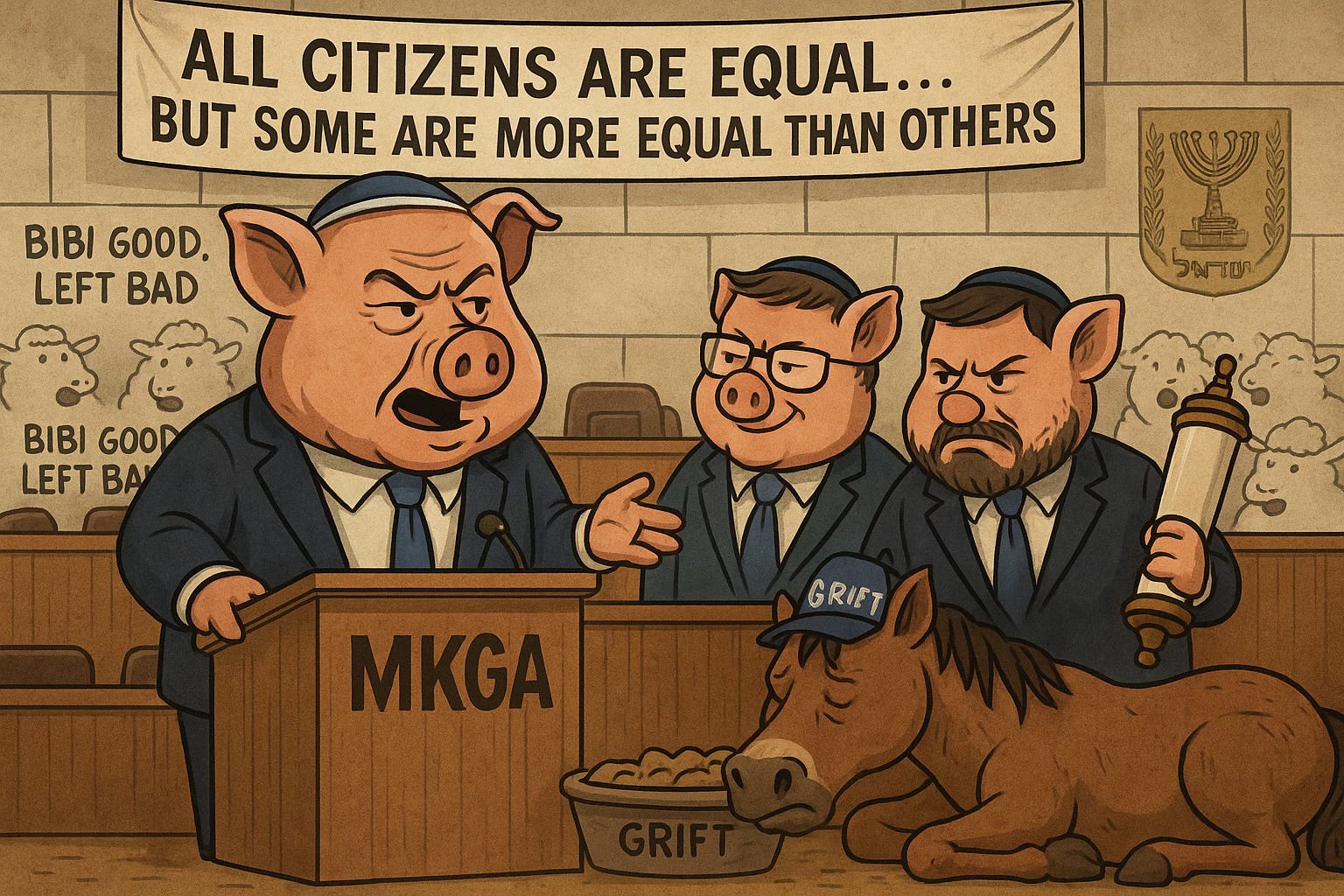
“Make the Knesset Great Again—one Torah scroll and grift bucket at a time.” Visual generated by ChatGPt. Any likeness to real people is intended. 

Eighty years ago, Orwell gave the world Animal Farm, a simple but clever allegory about revolution gone rotten. What started as a cry for equality ended in authoritarian rule, historical erasure, and propaganda that would even impress Goebbels. Fast forward to 2025, and Orwell’s pigs have gone kosher. Welcome to Israel’s own Animal Farm! The Israeli version stars a prime minister who won’t leave, loyal horses sent to the political glue factory, and a government that insists corruption is patriotism if it wears a kippah.

In Orwell’s tale, the animals overthrow their human masters to build a fairer society. But soon, the pigs seize power, rewrite the rules, and crush dissent all while the other animals cheer. In Israel, it wasn’t a revolution. It was a slow burn. A frog-boiling, court-sacking, coalition-pandering, power-hoarding slide into religious-nationalist absurdity. And at the helm of it all? Bibi Napoleon.

Like Orwell’s Napoleon, Netanyahu’s genius lies in self-preservation disguised as ideology. No indictment, no war, no hostage crisis, no protest movement can unseat him. He floats above it all like a teflon pig in an Armani suit. And when things go south, say, hundreds dead on October 7 or tens of thousands marching for democracy, it’s always someone else’s fault. The courts. The media. The Ashkenazi elite. Obama. Biden. Hamas. The left. The deep state. His own shadow.

Orwell had Squealer, the propaganda pig who could justify anything with a snort and a spin. In Bibi’s barnyard, Squealer is played by a rotating cast of right wing nut jobs: Itamar Ben-Gvir shrieking about Arab crime, Bezalel Smotrich rewriting Palestinian history, or Miri Regev redefining loyalty to mean “silence.” Add Channel 14 (Israel’s Fox News equivalent), and you’ve got the full Orwellian orchestra playing a classical authoritarian symphony.

But the tragedy of Animal Farm isn’t just about the rulers. It’s about Boxer—the workhorse who keeps his head down, trusts the process, and repeats the regime’s slogans until he drops. In Israel, Boxer is every reservist who showed up on October 8, every parent who buried a child from Nova or Nahal Oz, every kibbutznik still farming under fire, every secular Zionist who thought “this too shall pass.” What they got instead: abandonment, political exploitation, and a front-row seat to a government more interested in legal immunity than national unity.

The judicial overhaul? That was the pigs deciding that “some animals are more equal than others.” The selective drafting of Haredi men? That’s Boxer doing all the fighting while the pigs hold Torah scrolls over their heads and call it divine exemption. The attempt to fire the Attorney General, the weakening of liberal education, cultural institutions, and the press? That’s the sheep bleating “Bibi good, Left bad” on command.

And yet, despite all this, the banner still hangs: “The only democracy in the Middle East.”But if you squint, it now reads like Orwell’s commandment: “All citizens are equal, but some are more equal than others.” Settler violence gets ignored. Anti-occupation protesters get water cannons. Hostages get slogans. The people get gaslit.

And still the pigs walk upright.

Because what’s happening in Israel today isn’t just a political crisis. It’s a spiritual one. The Zionist project, founded on the ashes of exile and the dream of collective dignity, is being slowly butchered by a regime that thinks survival equals righteousness, and democracy is just a speed bump on the road to messianic deliverance. This isn’t left vs. right anymore. It’s “rule of law” vs. “rule BY law”. It’s Orwell with tefillin.

We Jews know tyranny. We’ve run from it, resisted it, been crushed by it. But now we’re watching it grow from within. Not with jackboots, but with coalition agreements. Not with camps, but with cynical deals that trade hostages for headlines and votes for silence. The glue factory isn’t a place, it’s a policy.

So let’s end, as Orwell did, with a chilling mirror:

“The creatures outside looked from the pig to Netanyahu, and from Netanyahu to the pig, and from the pig to Netanyahu again; but already it was impossible to say which was which.”

Happy 80th Animal Farm

And hey, let’s be careful out there, but don’t be a sheep. And have a great weekend everyone!

Brad out

The Jew News Review – August 9, 2025 – “It’s time for Israel to “win the peace””

Shabbat shalom.

JNR readers may have noticed that I have not been doing my usual roundup of the news in recent posts. My reason for doing so is that for the last few months, the issues facing Jews seem so awful, so dire and existential, that brief summaries don’t seem appropriate. So I take up my pen with the honorable intention of trying to express my own feelings and point of view on whatever is garnering major headlines of the week, pick one, and attempt to go a little deeper rather than wide. 

This week, with Nut-and-yahoo’s latest pivot for full “occupation” of Gaza, I have been doing some thinking about how Israel might win the battle, win the war, get our hostages back, and win back the hearts and minds of Jews and non-Jews around the globe, if that is still possible. Optimist that I am, I believe it still is. 

Andrew Fox, a British military expert, recently noted in his Substack “Occupation of Gaza” that Israel has now formally declared what amounts to a military occupation of the Strip, short of annexation, but unmistakably a hard pivot toward control. The idea is to dismantle Hamas’s infrastructure, restore a measure of security, and then hand off governance without getting bogged down in Gaza’s civic administration. It is a tactician’s plan, meant to secure the battlefield while avoiding the political and economic quicksand of permanent rule. It is about as popular as a fart in a phone booth. This plan is opposed by a majority of Israelis, the relatives of hostages in Gaza — who yesterday protested outside the security cabinet’s meeting draped in chains — and the international community, including allies like Germany. Even the IDF has come out publicly against it. 

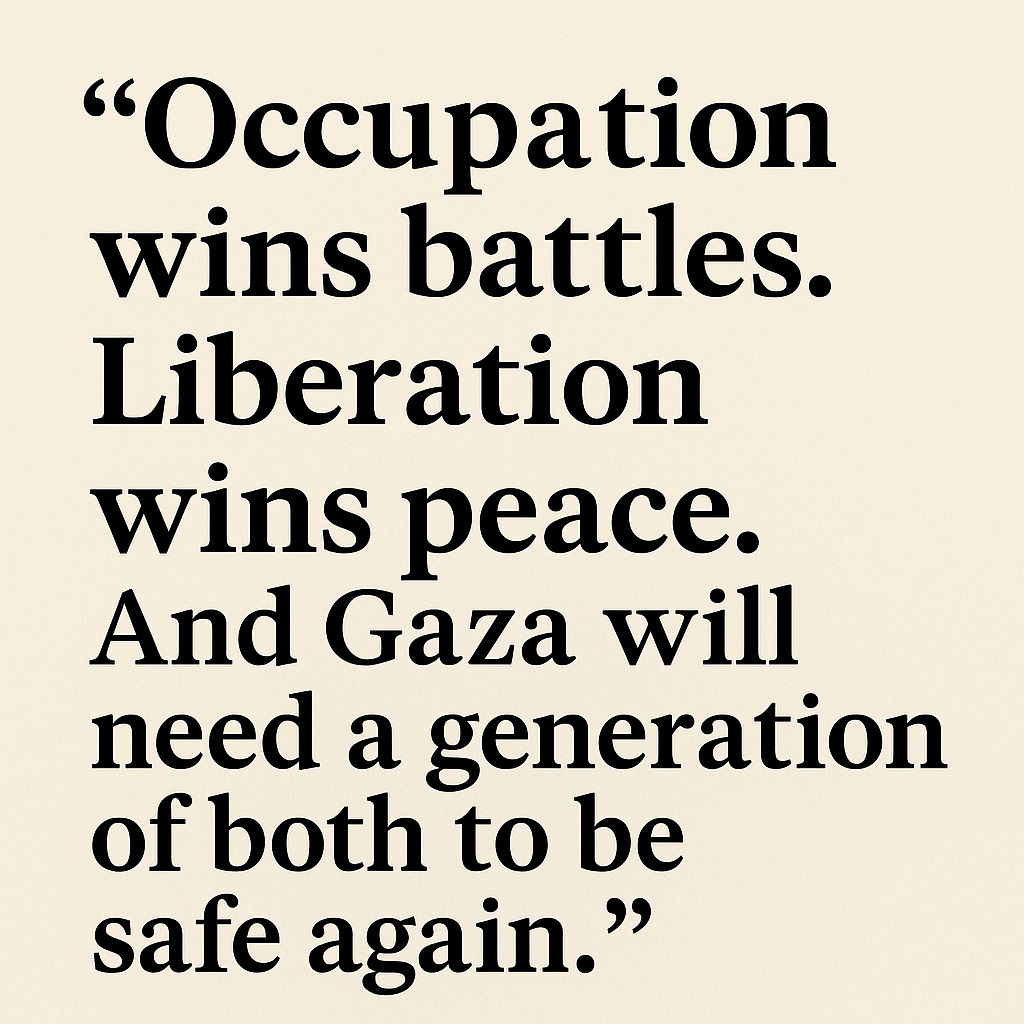
But here’s my take on the problem: “Occupation” is the wrong frame if Israel wants to win not just the war, but the peace. And winning the peace, if we are honest, will take decades, not months.

We have seen this movie before. In World War II, the Allies did not storm France, Belgium, and Germany as occupiers. They came as liberators, ousting fascism, dismantling Nazi power, and setting the stage for rebuilding civil life. In France, Belgium, the Netherlands and elsewhere in Europe, liberation meant the return of legitimate local governance. In Germany and Japan, it meant total de-Nazification and de-militarization, followed by a painstaking reconstruction that took a generation to bear fruit. The lesson is clear: liberation is not a soft alternative to occupation, it is occupation with a moral purpose and an exit plan.

But let’s be blunt: we do not have a trustworthy Palestinian partner. Poll after poll shows that a majority of Palestinians still support Hamas or its genocidal policies toward Jews and Israel. Many celebrated October 7. That is not a population ready to sign onto a two-state solution that offers security and mutual recognition. To get there, Gaza needs more than physical rebuilding. It needs de-radicalization on a scale that parallels what the Allies did in postwar Germany and Japan, uprooting the ideological rot, dismantling the propaganda machinery, rewriting the textbooks, and creating civic and political institutions that reject the old hatreds. That is not a one-year project. That is a 20- to 30-year generational slog. But it is doable, and there is recent success in the UAE and Saudi Arabia to prove the point. 

An occupation signals control for control’s sake. Or as in the West Bank, control for security’s sake. It is the language of checkpoints, curfews, and barbed wire. A liberation signals the dismantling of a tyranny so civilians can live without fear, and yes, even without hating their neighbors. A liberation posture would make clear to Gazans and the watching world: Israel is not there to colonize, Israel is there to remove a violent, corrupt, death-cult regime, and Israel will secure the territory until it is safe for a new, non-Hamas governance structure to take root. It also gives Israel the moral high ground. Occupiers are easy to demonize. Liberators are harder to smear.

Postwar Germany and Japan did not just “get over” fascism. The Allies imposed strict controls, purged leadership, banned hate propaganda, and physically rebuilt infrastructure while introducing democratic norms. For years, the United States and its allies ran schools, media, and civic organizations in ways that replaced authoritarian myths with new narratives of citizenship and peaceful coexistence. Gaza needs that same rigor. Remove Hamas from power and, crucially, from the hearts and minds of the next generation. End the sermons that sanctify murder. End the “pay for slay” terrorist policies. Rewrite the schoolbooks that erase Israel. Open space for independent media and genuine civic debate.

As Daniel Clarke-Serret argues in his latest post “Pax Arabica”, any lasting peace will require shattering the polite fiction that the Arab world can remain on the sidelines while Palestinian extremism festers. The so-called “Pax Arabica,” a patchwork of religious posturing and secular cynicism, has allowed moderate Arab regimes to talk about peace while doing precious little to build it. A true liberation of Gaza must include Jordan, Egypt, Lebanon, Saudi Arabia, the UAE, and other moderate Arab states in the liberating alliance. Not as symbolic backers, but as active participants, committing resources, political capital, and legitimacy to the process of rebuilding and de-radicalizing Gaza. Without them, the Arab street remains unchallenged in its Hamas sympathies, and the illusion of “Pax Arabica” limps on, feeding the next generation of October 7s.

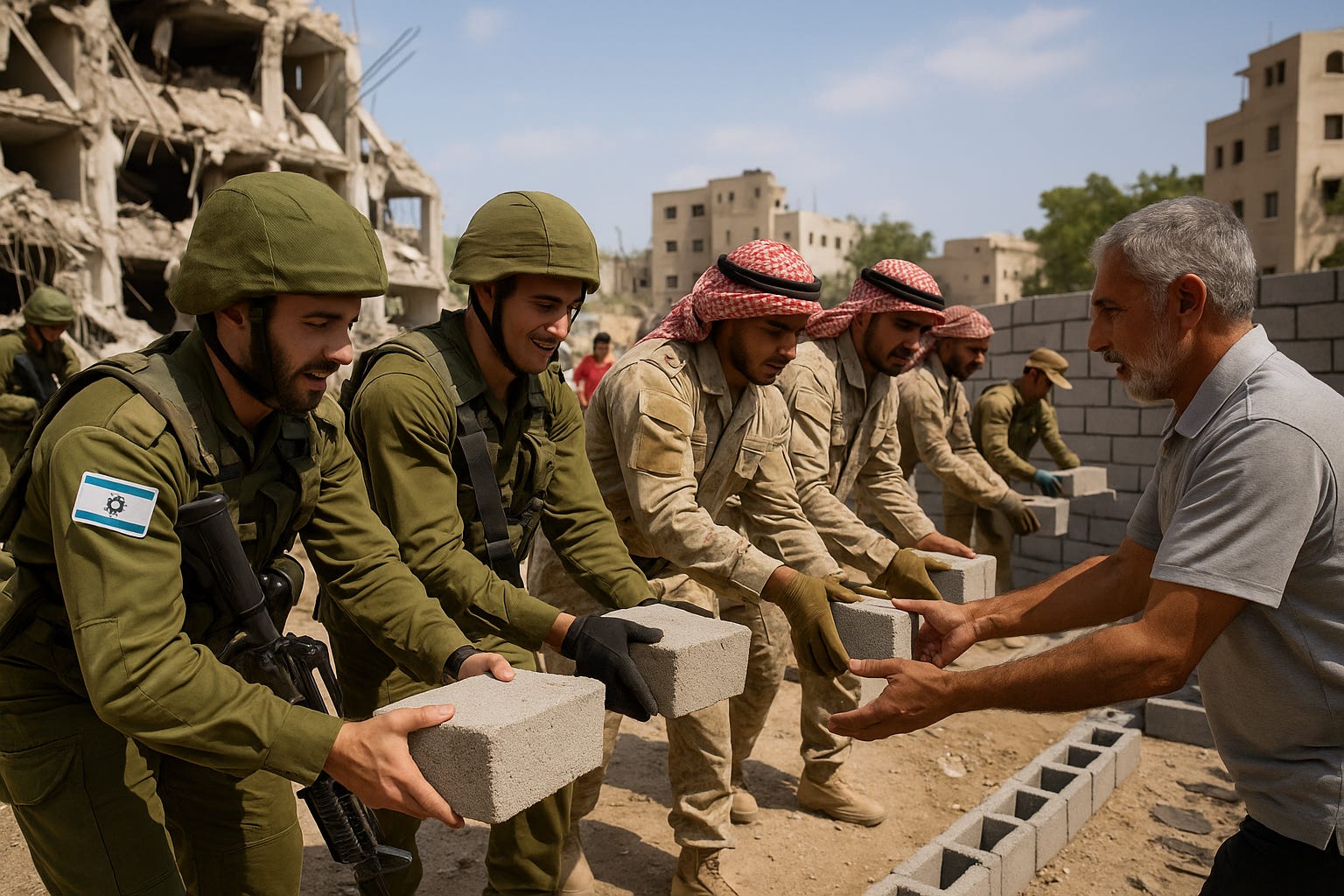
Gaza’s streets, power grid, hospitals, and water systems are wrecked. If Israel truly intends to liberate, rebuilding is not charity, it is strategic warfare. Every school rebuilt without a tunnel underneath it, every functioning hospital not run by Hamas, is a blow against their narrative of victimhood and martyrdom. Reconstruction can be a weapon to prove that life without Hamas is not only possible, it is better. The Allies understood this in 1945. They did not just put up flags and leave. They poured resources into infrastructure, industry, and education. That is why today, Germany and Japan are peaceful allies, not simmering enemy camps.

Liberation without an exit is just a slow-motion quagmire. The goal must be clear from the start: get our hostages back, destroy Hamas militarily and politically, form a transitional civil administration ideally Arab-led with Israel and international backing, implement a de-radicalization program alongside reconstruction, and hand over governance to credible, non-Hamas Palestinian leaders when it is safe to do so. That timeline may not fit into a single prime minister’s career. It might take as long as the Marshall Plan did. But without it, we are just repeating the cycle that led to October 7.

Right now, Israel’s stated posture is “control without permanent rule.” It is a hedge, and it sounds cautious. But it is also hollow. Without a liberation framework that includes Arab partners, moral clarity, and a generational de-radicalization plan, we risk losing both the war’s moral narrative and the peace that could follow it. Occupation will be judged by the checkpoints it erects. Liberation will be judged by the schools, hospitals, and markets it leaves behind.

In World War II, liberation did not mean naively trusting former Nazis. It meant removing them from power, prosecuting them, and building a society that would not produce them again. That is the real challenge in Gaza, and the only way to ensure there will not be another October 7.

Be safe out there everyone.

Brad out. 

This image was created by ChatGPt.